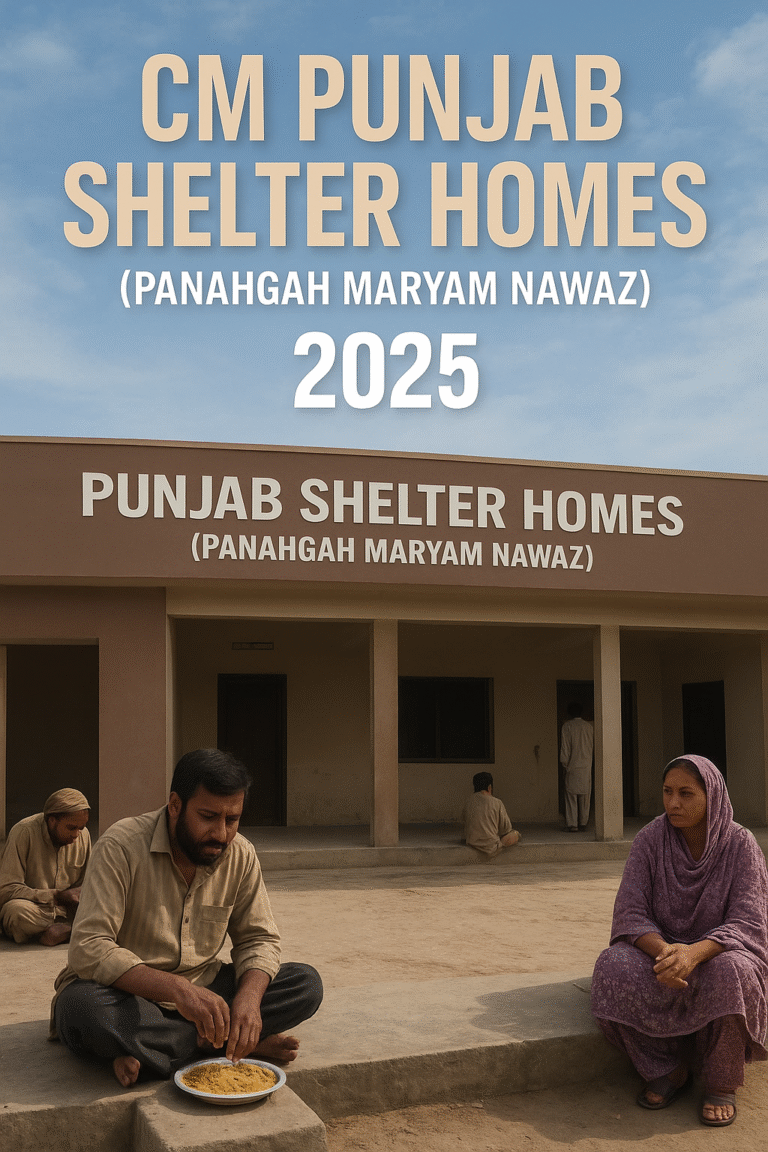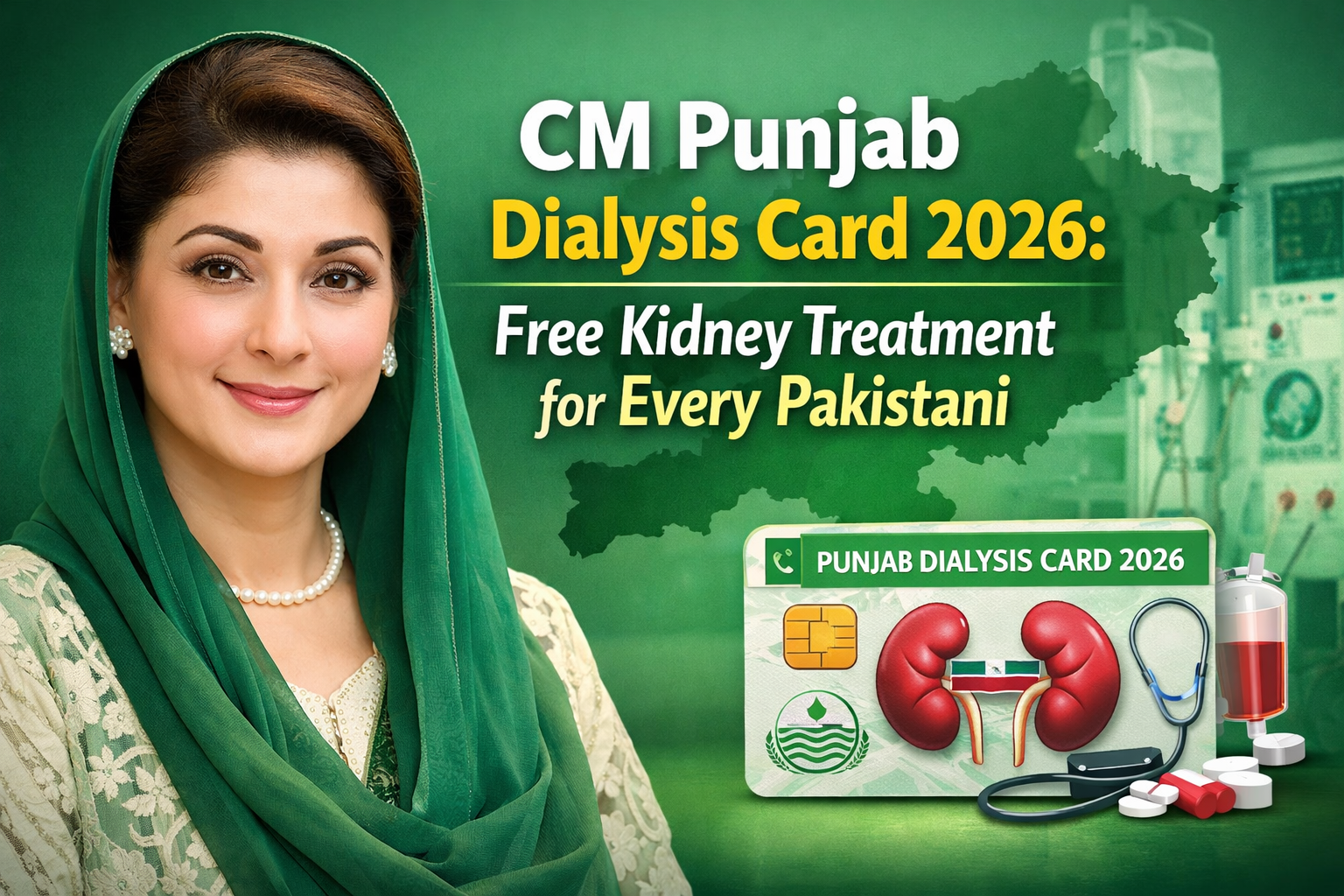
Kidney disease is silent, progressive, and devastating. For millions of Pakistanis living in Punjab, end-stage renal disease (ESRD) has long meant one grim choice: either afford expensive dialysis sessions or face fatal consequences. A single dialysis session can cost between PKR 3,000 to PKR 6,000, with most patients requiring two to three sessions per week. For a low-income family, this amounts to an impossible financial burden that can push an entire household into poverty.
Also Read: Bewa Sahara Card Registration 2026
That’s exactly why the CM Punjab Dialysis Card 2026 is being hailed as one of the most impactful healthcare initiatives in recent Pakistani history. Launched under the leadership of Chief Minister Punjab, this program provides free dialysis treatment to eligible kidney patients across the province, ensuring that life-saving care is no longer a privilege reserved for the wealthy.
In this comprehensive guide, we’ll walk you through everything you need to know about the CM Punjab Dialysis Card what it is, who qualifies, how to register, what benefits it offers, and how it compares to other health schemes. Whether you’re a patient, a caregiver, or a healthcare worker, this article is your definitive resource.
What Is the CM Punjab Dialysis Card 2026?
The CM Punjab Dialysis Card is a government-funded health initiative introduced by the Punjab government to provide free-of-cost kidney dialysis services to registered patients across Punjab, Pakistan. Under this scheme, eligible patients receive a special card that grants them access to dialysis sessions at empaneled government and private hospitals throughout the province completely free of charge.
This initiative is part of Punjab’s broader Sehat Sahulat Programme (SSP) and aligns with Pakistan’s national vision of universal health coverage. The scheme specifically targets low-income households where patients would otherwise be unable to afford treatment.
Key Highlights at a Glance
| Feature | Details |
|---|---|
| Program Name | CM Punjab Dialysis Card 2026 |
| Launched By | Chief Minister of Punjab |
| Target Beneficiaries | Low-income kidney patients in Punjab |
| Treatment Covered | Hemodialysis (free sessions) |
| Card Type | Digital / Physical Health Card |
| Annual Sessions Covered | Up to 156 sessions per year (3/week) |
| Empaneled Hospitals | 50+ hospitals across Punjab |
| Registration Authority | Punjab Health Authority (PHA) |
| Cost to Patient | Zero (completely free) |
Why This Program Matters: The Kidney Disease Crisis in Punjab
To appreciate the CM Punjab Dialysis Card 2026, you first need to understand the scale of the problem it addresses.
According to health data from the Pakistan Society of Nephrology, approximately 25,000 new patients enter end-stage renal failure every year in Pakistan, with a significant proportion from Punjab. Chronic Kidney Disease (CKD) has become an epidemic driven by multiple factors unique to this region.
Also Read: Ramadan Nigehban Card 2026
Root Causes of Rising CKD in Punjab
- Contaminated drinking water: Many areas in South Punjab face arsenic and heavy metal contamination in groundwater, a leading cause of kidney damage.
- Uncontrolled diabetes and hypertension: Both are among the most common causes of CKD globally and are extremely prevalent in Punjab.
- Overuse of painkillers and herbal medicines: Unregulated use of NSAIDs and traditional “hakeem” medicines causes nephrotoxicity.
- Late diagnosis: Due to a lack of awareness, many patients are only diagnosed at stage 4 or 5, when dialysis becomes unavoidable.
- Poverty: The inability to afford early treatment accelerates disease progression.
Without dialysis, a patient in end-stage renal failure typically survives less than two weeks. The CM Punjab Dialysis Card directly addresses this life-or-death scenario by eliminating the cost barrier.
Who Is Eligible for the CM Punjab Dialysis Card 2026?
The scheme is designed specifically to help those who need it most. Here is a breakdown of the eligibility criteria:
Eligibility Criteria
1. Residency Requirement The applicant must be a permanent resident of Punjab, confirmed by a valid CNIC (Computerized National Identity Card) with a Punjab address.
2. Medical Diagnosis The applicant must be clinically diagnosed with End-Stage Renal Disease (ESRD) and must require regular hemodialysis as certified by a registered nephrologist.
3. Income Threshold Priority is given to households registered under:
- BISP (Benazir Income Support Programme) households below the poverty line
- National Socio-Economic Registry (NSER) with a poverty score below the designated threshold
- Other low-income households as verified by Punjab’s health authorities
4. Age There is no age restriction children, adults, and elderly patients are all eligible.
5. Existing Patients Patients already receiving dialysis at government hospitals are fast-tracked for card issuance.
Who Does NOT Qualify?
- Patients who are NOT residents of Punjab
- Patients who do not have a confirmed CKD/ESRD diagnosis
- Patients from households with incomes above the designated threshold (unless special provisions apply)
- Patients already covered under other government health insurance schemes (unless gaps exist)
Pro Tip: If you are unsure about your eligibility, visit your nearest District Health Authority (DHA) office or call the Punjab Health Authority helpline. They can verify your NSER score and guide you through the process.
Also Read: Punjab Widow Support Card Scheme 2026
What Benefits Does the Dialysis Card Provide?
The CM Punjab Dialysis Card 2026 is far more comprehensive than just covering the cost of one or two sessions. Here’s a detailed look at what’s included:
Core Benefits
Free Hemodialysis Sessions Patients receive up to three dialysis sessions per week, which equals approximately 156 sessions per year all completely free of cost. This aligns with international clinical guidelines that recommend thrice-weekly dialysis for ESRD patients.
Dialysis Consumables The cost of consumables used during each session including dialysis filters (dialyzers), tubing sets, and bloodlines is also covered under the card. This is a major relief, as consumables alone can cost PKR 2,000–4,000 per session.
Laboratory Tests Registered patients are entitled to periodic blood tests and kidney function tests (KFTs) at empaneled labs, ensuring continuous monitoring of their health.
Medicines Essential medicines prescribed in connection with dialysis treatment such as erythropoietin injections (EPO), heparin, iron supplements, and blood pressure medications may be covered or subsidized depending on the hospital.
Emergency Care In case of dialysis-related complications, cardholders receive emergency treatment at empaneled hospitals without upfront payment.
Indirect Benefits
- Reduced financial stress on families, allowing caregivers to maintain stable employment
- Improved treatment compliance since patients no longer skip sessions due to cost
- Better health outcomes from consistent, timely dialysis
How to Apply for the CM Punjab Dialysis Card 2026
Applying for the dialysis card is designed to be as straightforward as possible. Here is a step-by-step guide:
Get a Medical Certificate
Visit a registered nephrologist or government hospital nephrology department. Obtain a formal diagnosis certificate stating that you require regular hemodialysis for ESRD.
Gather Required Documents
Prepare the following documents:
- Original CNIC (and photocopy) of the patient
- B-Form (for patients under 18)
- Medical certificate / prescription from a nephrologist
- BISP / NSER registration proof (if applicable)
- Recent passport-size photographs (usually 2)
- Proof of residence (utility bill or domicile certificate)
Visit the Enrollment Center
Go to your nearest:
- District Health Authority (DHA) office
- Tehsil Headquarters Hospital or DHQ Hospital
- Designated CM Punjab Health Card Registration Desk
In larger cities like Lahore, Faisalabad, Multan, and Rawalpindi, dedicated enrollment camps are regularly set up to facilitate registration.
Biometric Verification
Your thumbprint and CNIC will be biometrically verified through the NADRA system to confirm your identity and Punjab residency.
Card Issuance
Once your application is processed and approved, you will receive your CM Punjab Dialysis Card either as a physical card or as a registered digital entry linked to your CNIC. Processing time is typically 7–15 working days.
Start Treatment
Visit any empaneled hospital with your card and CNIC to begin receiving free dialysis sessions.
List of Empaneled Hospitals Under the Scheme
The Punjab government has empaneled a growing network of both public and private hospitals to ensure geographic accessibility. Major facilities include:
Government Hospitals
- Services Hospital, Lahore
- Jinnah Hospital, Lahore
- DHQ Hospital, Faisalabad
- Nishtar Hospital, Multan
- DHQ Hospital, Rawalpindi
- Allied Hospital, Faisalabad
Private/NGO Facilities (Empaneled)
- Kidney Centre (various locations)
- Dialysis centers under the Indus Hospital Network
- Selected private dialysis clinics in smaller districts
Important: The list of empaneled hospitals is regularly updated. Always confirm with the Punjab Health Authority or the hospital directly before visiting.
CM Punjab Dialysis Card vs. Other Health Schemes: A Comparison
Many residents of Punjab are covered under multiple health schemes. Here’s how the CM Punjab Dialysis Card compares:
| Feature | CM Punjab Dialysis Card | Sehat Sahulat Programme | BISP Health Support |
|---|---|---|---|
| Focus Area | Kidney Dialysis Only | Inpatient Treatment | Cash Transfers |
| Sessions Covered | Up to 156/year | Limited hospitalization | N/A |
| Target Group | ESRD Patients | All poor households | BISP-registered families |
| Cost Coverage | Full | Up to PKR 1,000,000/year | Indirect |
| Application Process | Hospital/DHA | NADRA/DHA | BISP offices |
| Private Hospital Access | Yes (empaneled) | Yes | No |
As you can see, the dialysis card is highly specialized and fills a critical gap that general health schemes do not address adequately. Dialysis is a recurring, long-term need not a one-time hospitalization which is why a dedicated program is essential.
Also Read: Parwaz Card Registration Portal 2026
Real Stories: How the Dialysis Card Is Changing Lives
Rashida Bibi, 52, from Bahawalpur Rashida was diagnosed with Stage 5 CKD three years ago. Her husband, a daily wage laborer, was spending his entire income and going into debt to keep her on dialysis. After receiving the CM Punjab Dialysis Card, her sessions became completely free. “Now my husband doesn’t cry at night anymore,” she shared. “We are not rich, but we are not dying either.”
Muhammad Akbar, 34, from Gujranwala A young father of three, Akbar was skipping dialysis sessions every other week due to financial constraints. His health was deteriorating rapidly. After card enrollment, he has been receiving regular treatment and is now stable. “I can watch my children grow up,” he said. “That’s everything.”
These stories are representative of thousands of patients across Punjab whose lives have been fundamentally transformed by this initiative.
Challenges and Areas for Improvement
While the CM Punjab Dialysis Card 2026 is a landmark program, it is not without its challenges. Being honest about these issues is important for holding authorities accountable and improving the scheme.
Current Challenges
- Awareness Gap: Many patients in remote areas of South Punjab and rural districts remain unaware of the program.
- Hospital Capacity: Empaneled hospitals in smaller districts are often overwhelmed, leading to long waiting times for sessions.
- Supply Shortages: Occasional shortages of dialysis consumables at government hospitals disrupt treatment.
- Documentation Barriers: Patients without CNICs or those with incomplete NSER registration face difficulty enrolling.
- Follow-up Care: Beyond dialysis, access to nephrology consultations and transplant evaluation is still limited for card holders.
Recommendations
Healthcare advocates recommend the following improvements:
- Expanding awareness campaigns through local radio, mosques, and community health workers
- Increasing the number of empaneled centers in rural areas
- Streamlining NSER verification to reduce enrollment delays
- Integrating transplant evaluation services into the card’s coverage
(FAQ) CM Punjab Dialysis Card 2026
Q1: What is the CM Punjab Dialysis Card 2026?
A: The CM Punjab Dialysis Card 2026 is a government health initiative by the Punjab government that provides free kidney dialysis sessions to eligible low-income patients with End-Stage Renal Disease (ESRD) residing in Punjab, Pakistan.
Q2: How many free dialysis sessions are covered under the card?
A: The card covers up to 3 dialysis sessions per week, amounting to approximately 156 free sessions annually per registered patient.
Q3: Who is eligible to apply for the dialysis card?
A: Permanent residents of Punjab who are diagnosed with ESRD and belong to low-income households (verified through BISP/NSER) are eligible. There is no age restriction.
Q4: What documents are required for registration?
A: You need your CNIC, a medical certificate from a nephrologist, BISP/NSER proof (if applicable), proof of residence, and passport-size photographs.
Q5: Is the application process online or in-person?
A: Currently, registration is primarily done in-person at District Health Authority offices, DHQ hospitals, or designated enrollment camps. Online pre-registration options may be available through the Punjab Health Authority portal.
Q6: Can patients outside Punjab apply for this card?
A: No. The CM Punjab Dialysis Card is exclusively for permanent residents of Punjab, as verified by CNIC.
Q7: Are private hospitals included in the scheme?
A: Yes. Several empaneled private and NGO-run dialysis centers across Punjab accept the card for free treatment.
Q8: What if my nearest empaneled hospital is far from my home?
A: Contact your District Health Authority they can advise on the nearest empaneled facility. The government is also working to expand the network of partner hospitals.
Q9: Does the card cover kidney transplant surgery?
A: Currently, the card primarily covers hemodialysis. For transplant coverage, patients may need to explore the broader Sehat Sahulat Programme or other provincial programs.
Q10: How long does it take to receive the card after applying?
A: Processing typically takes 7 to 15 working days after successful biometric verification and document submission.
Final Thoughts: A Step Toward Health Justice in Punjab
The CM Punjab Dialysis Card 2026 is more than a health card it is a statement of intent. It tells the most vulnerable citizens of Punjab that their lives have value, that the state recognizes their suffering, and that access to life-saving treatment should not depend on the size of your wallet. Kidney disease does not discriminate between the rich and the poor. But without programs like this one, the consequences of the disease most certainly do. If you or someone you know is suffering from kidney failure and cannot afford dialysis, don’t wait. Visit your nearest District Health Authority office today, carry your documents, and take the first step toward free, consistent treatment under the CM Punjab Dialysis Card 2026. Because every patient deserves a fighting chance.