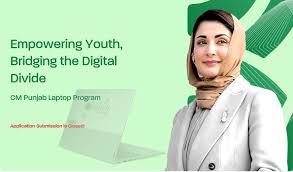
After years of watching public sector students receive free laptops, private university students in Punjab finally have something to celebrate.
The Punjab government just dropped incredible news.
For the first time ever, the Punjab laptop scheme private universities initiative is bringing digital equality to thousands of students who’ve felt overlooked for far too long.
Starting in 2026, this groundbreaking expansion proves that your choice of university shouldn’t determine your access to essential technology.
Quick Overview: What You Need to Know
| Aspect | Details |
|---|---|
| Total Laptops (Phase 1) | 10,000 units for private universities |
| Eligibility | HEC-recognized private universities in Punjab |
| Minimum Marks Required | 70% or equivalent CGPA |
| Laptop Specifications | Core i7, 13th Generation |
| Special Quotas | Female students, disabled students, low-income families |
| Previous Recipients | Not eligible if received laptop before |
| Application Process | Through university administration |
Why This Expansion Matters More Than You Think
Let’s be honest. Digital access isn’t a luxury anymore—it’s a survival tool.
When public university students started receiving high-performance laptops while private sector students struggled with outdated devices or shared computers, the gap felt unfair.
Many private university students face even higher financial pressure than their public sector counterparts. Tuition fees pile up. Living expenses don’t stop. And buying a decent laptop? That’s often a choice between eating properly or staying current with coursework.
According to officials from the Higher Education Department, this expansion will begin with approximately 10,000 laptops distributed to eligible students enrolled in private universities across Punjab.
This isn’t just about hardware. It’s about leveling the playing field.
The Punjab Laptop Scheme Private Universities Eligibility Checklist
Getting your hands on one of these laptops requires meeting specific criteria.
The government kept things straightforward and fair.
Core Requirements
Academic Performance You need at least 70% marks or the equivalent CGPA in your most recent examination. This standard applies equally to both public and private sector students, maintaining consistency across the board.
Enrollment Status You must be currently enrolled in an HEC-recognized private university located anywhere in Punjab. Your institution needs legitimate recognition—no exceptions here.
Domicile Requirement A Punjab domicile is mandatory. This ensures the program benefits students who call Punjab home.
Previous Laptop Recipients If you already received a laptop through any earlier government scheme, you’re out of luck this time. The goal is reaching students who haven’t benefited yet.
Priority Categories That Get Extra Consideration
The Punjab laptop scheme private universities program doesn’t just look at grades.
Female Students Gender equality remains a priority, with female students receiving additional weightage during selection.
Students with Disabilities Accessibility matters. Students facing physical challenges get special consideration to ensure technology reaches those who need it most.
Financially Disadvantaged Backgrounds Coming from a low-income family? That works in your favor. The scheme recognizes that financial barriers shouldn’t block talented students.
How the Selection Process Actually Works
Transparency drives this entire operation.
Universities play the crucial role here, not some distant government office.
Your university administration will verify your academic records. They’ll compile lists of qualifying students based on merit and the special categories mentioned earlier.
These lists then go to the Higher Education Department for final approval.
No online registration portal exists where students apply directly. Instead, your institution handles the paperwork, reducing errors and preventing fraud.
This collaborative approach between universities and the government creates accountability on both ends.
What Makes These Laptops Worth Getting Excited About
Forget basic, sluggish machines that barely open Chrome without freezing.
The laptops provided through the Punjab laptop scheme private universities come with serious power.
Technical Specifications
- Processor: Intel Core i7, 13th Generation
- Storage: High-speed SSD for lightning-fast performance
- Memory: Sufficient RAM for seamless multitasking
- Build Quality: Professional-grade devices suitable for demanding academic work
These aren’t token gestures. They’re proper tools for research, coding, design work, data analysis, and everything modern education demands.
Students can run complex software, attend virtual lectures without lag, write extensive reports, and participate in online learning platforms without technical frustration.
The Bigger Picture: Why Digital Access Changes Everything
Modern education lives online whether we like it or not.
Research papers live in digital libraries. Professors share lecture notes through learning management systems. Group projects happen on collaborative platforms. Internship applications? All online.
Without reliable access to a personal laptop, students fall behind constantly.
They miss submission deadlines because campus computer labs have limited hours. They struggle to participate in virtual group discussions. They can’t work on assignments at their own pace.
Universities across Pakistan increasingly rely on digital tools for lectures, assessments, research submissions, and even internships, making laptops essential rather than optional.
The Punjab laptop scheme private universities expansion recognizes this reality.
It acknowledges that your institution’s name shouldn’t determine whether you can fully engage with your education.
What Happens Next: Timeline and Distribution
Phase one targets 10,000 laptops specifically for private university students.
The government hasn’t announced exact distribution dates yet, but the framework mirrors the broader CM Laptop Program 2026, which distributed over 110,000 laptops to public sector students.
Universities will receive their allocated shares based on enrollment numbers and qualifying students.
Distribution ceremonies will likely happen on campus, with officials handing laptops directly to selected students.
Students should stay in close contact with their university administration offices for updates about selection lists and distribution schedules.
Common Concerns Students Are Asking About
“Will my university definitely participate?”
All HEC-recognized private universities in Punjab should participate. However, verify with your administration to confirm they’re coordinating with the Higher Education Department.
“Does my CGPA system convert to the 70% requirement?”
Most universities use conversion scales. A CGPA of approximately 2.8 to 3.0 (out of 4.0) typically equals 70%, but check your specific institution’s grading policy.
“Can I apply if I’m in my final year?”
As long as you meet all other eligibility criteria and haven’t received a laptop previously, your year of study shouldn’t disqualify you—though first and second-year students often receive priority.
“What if I transferred from a public university?”
If you received a laptop while at the public university, you’re ineligible. If you never received one, you should qualify assuming you meet current criteria.
The Impact Beyond Individual Students
This policy shift sends powerful messages.
It tells private sector students they matter just as much as their public university peers.
It acknowledges that Pakistan’s future depends on educated, digitally literate youth regardless of where they study.
It reduces the stigma some students felt about choosing private education, showing the government supports all quality institutions.
Education analysts suggest this move reflects growing governmental understanding that digital access isn’t optional anymore.
Technology determines who succeeds and who struggles in modern academia and future careers.
What You Should Do Right Now
Don’t wait around assuming things will happen automatically.
Verify your academic performance meets the 70% threshold.
Confirm your university holds valid HEC recognition.
Visit your university’s administration or student affairs office and ask specifically about the Punjab laptop scheme private universities program.
Ensure your university has your correct contact information and updated academic records.
Watch for official announcements from your institution about verification processes and selection lists.
The opportunity is real. The laptops are coming. But you need to stay informed and proactive.
Looking Forward: What This Means for Punjab’s Education Future
The Punjab laptop scheme private universities expansion represents just one piece of a larger digital transformation.
When students across all types of institutions access quality technology, the entire education ecosystem improves.
Competition increases based on talent and effort rather than resource availability.
Universities can implement more ambitious digital curricula knowing students have the tools to participate.
Research quality improves when students can access online journals, statistical software, and collaborative platforms without barriers.
This initiative plants seeds for a more equitable, digitally advanced education system throughout Punjab.
Your laptop might seem like just one device, but multiply that by 10,000 students, and you’re looking at transformational change.
Frequently Asked Questions
Who qualifies for the Punjab laptop scheme private universities program?
Students enrolled in HEC-recognized private universities in Punjab with at least 70% marks or equivalent CGPA qualify, provided they haven’t received government laptops before. Special consideration goes to female students, disabled students, and those from low-income backgrounds.
How many laptops are available in the first phase?
The initial phase allocates 10,000 laptops specifically for private university students across Punjab.
Are the eligibility criteria different for private versus public universities?
No. The merit system remains consistent across both sectors to ensure fairness and transparency. The same 70% threshold applies universally.
Do I apply online or through my university?
Applications are processed through university administrations, not via direct online registration. Your institution verifies records and submits qualifying student lists to the Higher Education Department.
What laptop specifications will students receive?
Students receive Core i7 13th Generation laptops with high-speed SSD storage and sufficient RAM for demanding academic tasks—the same specifications provided to public sector students.
Can I apply if I’m studying part-time or through distance learning?
Eligibility focuses on enrollment in recognized institutions and academic performance. However, specific program formats should be confirmed with your university administration regarding qualification status.
When will the laptops actually be distributed?
Exact distribution dates haven’t been announced yet, but the process typically follows merit list verification and approval by the Higher Education Department. Stay connected with your university for specific timeline updates.
Why did it take so long to include private universities?
The original schemes focused on public sector institutions, but growing recognition of digital access as a fundamental educational need drove this expansion. The government now acknowledges that institutional type shouldn’t determine technology access.
Final Thoughts: Take Action Today
The Punjab laptop scheme private universities initiative marks a genuine turning point.
After years on the sidelines, private sector students finally get the recognition and support they deserve.
This isn’t charity—it’s investment in Pakistan’s future through equal opportunity.
Your move? Stay informed, meet the requirements, and get ready to receive the tools that will power your academic journey forward.