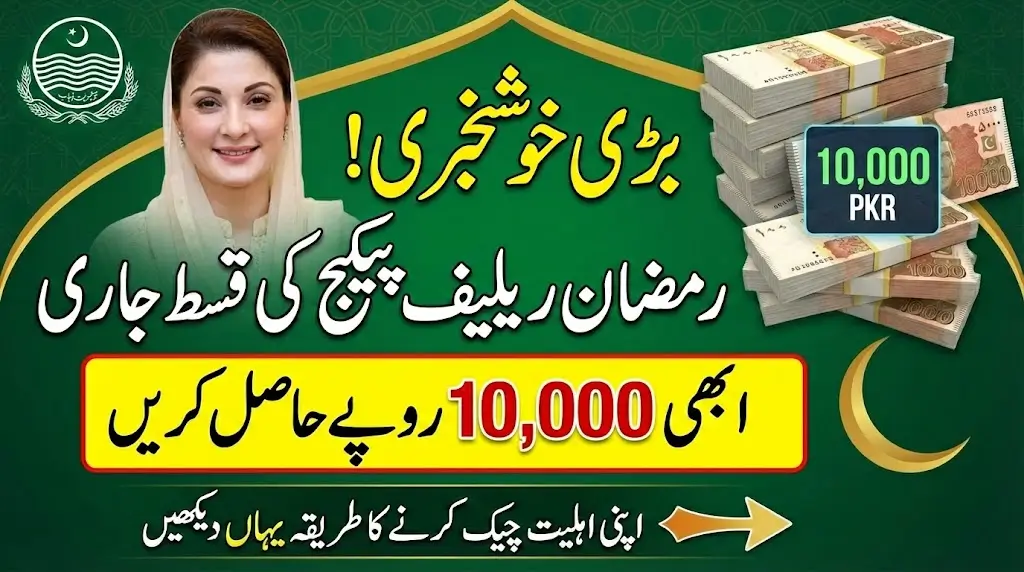
Rumours are flying everywhere. WhatsApp statuses, TikTok videos, YouTube thumbnails – all repeating the same line: “Ration Card and 10,000 Cash Distribution Will be Started on 10th February.” For a struggling family, that sentence feels like a lifeline. But it also raises a lot of anxiety.
Is it real?
Who will get help?
How do you apply without getting scammed? This guide walks you through how such a scheme usually works in Pakistan, what to expect, and how to protect yourself.
Important: Details of any specific government program can change.
Always confirm final information from official government sources (BISP, Ehsaas, provincial social protection authorities) before taking action.
Quick Snapshot: Ration Card and 10,000 Cash Distribution Will be Started on 10th February
Here’s a simple overview based on how similar Pakistani relief schemes normally operate.
| Item | Expected Detail (Typical Practice in Pakistan) |
|---|---|
| Programme name / type | Food ration support + one-time or short-term cash assistance |
| Claimed start date | “Ration Card and 10,000 Cash Distribution Will be Started on 10th February” |
| Cash amount | Around Rs 10,000 per eligible household (often one-time or limited rounds) |
| Ration benefit | Subsidised flour, ghee, sugar, pulses, etc. via card or CNIC-based system |
| Likely implementing bodies | Federal govt (e.g., BISP/Ehsaas), provinces, Utility Stores, or social funds |
| Target group | Poor and vulnerable households, low-income workers, widows, disabled, etc. |
| Application method | Commonly via CNIC, SMS (e.g., codes like 8171 in past), or local offices |
| Payment channels | Bank branches, ATMs, POS agents, or designated payment camps |
| Verification needed | CNIC, poverty score, household data, mobile verification |
| Key warning | Beware of fake links, agents, or fees – registration is normally free |
What Does “Ration Card and 10,000 Cash Distribution Will be Started on 10th February” Really Mean?
When you see this phrase trending, it usually points to a relief package combining two things:
- A ration card or ration entitlement, and
- Rs 10,000 cash support per household.
The exact design depends on the government decision, but the core goal is straightforward:
help families survive inflation and food price shocks.
Understanding the Ration Card Part
In Pakistan, a ration card (or ration-style system) generally means:
- Your CNIC or a special card is linked to a subsidy.
- You buy basic items like:
- Wheat flour
- Ghee / cooking oil
- Sugar
- Pulses
- Rice
Sometimes, there is no physical “card”.
Your CNIC itself works like a ration card, and the subsidy is applied automatically when the shopkeeper enters your ID in the system.
This kind of ration support:
- Lowers your monthly kitchen expenses.
- Reduces the stress of constantly rising prices.
- Gives at least some food security to poor and middle-lower income families.
How the Rs 10,000 Cash Relief Usually Works
The second part of the sentence – the 10,000 cash distribution – is direct financial support.
In past Pakistani programs, this has often been:
- A one-time payment (e.g., emergency relief).
- Or a limited series of payments during crises (floods, COVID, inflation spikes).
Typically:
- Money is given per household, not per individual.
- Payments are routed through:
- Bank accounts
- Branchless banking agents
- Designated payment centres
For a family that barely earns Rs 25,000–30,000 a month, Rs 10,000 can mean:
- Rent saved for a month.
- School fees paid on time.
- Medicine for an elderly parent.
- Or simply full meals on the table for a few weeks.
That’s why news that Ration Card and 10,000 Cash Distribution Will be Started on 10th February spreads so emotionally and so fast.
Who Can Be Eligible?
Exact eligibility for any specific scheme must come from official notifications.
But past ration and cash programs in Pakistan usually focus on vulnerable households.
Typical Eligibility Criteria in Pakistan
Common filters include:
- Low monthly income (often verified through a government poverty database).
- Families already registered with BISP / Ehsaas.
- Widows and women-headed households.
- People with disabilities.
- Senior citizens with no steady income.
- Daily wage workers and informal labourers.
Some schemes also exclude:
- Government employees above a certain grade.
- People filing higher-income tax returns.
- Households with significant property or vehicle ownership.
So even if everyone is repeating “Ration Card and 10,000 Cash Distribution Will be Started on 10th February,”
not every citizen will qualify.
Documents You May Need
Based on earlier programs, be ready with:
- Original CNIC (for you and your spouse, if applicable).
- Registered mobile number in your name.
- Proof of residence (address used in your CNIC or BISP records).
- In some cases:
- Disability certificate
- Widows’ documents (husband’s death certificate)
- Children’s B-Forms
Keeping these documents ready helps you move faster when official registration opens.
Step-by-Step: How to Check If You Qualify
Instead of panicking or believing every YouTube video, move step by step.
1. Confirm the News First
Because the phrase “Ration Card and 10,000 Cash Distribution Will be Started on 10th February” is catchy, it is also abused for clicks and fake promotions.
Do this before believing anything:
- Check official websites:
- BISP / Ehsaas
- Relevant provincial government portals
- Follow verified social media accounts of:
- Information Ministry
- BISP / Social Protection Authority
- Listen to mainstream TV news and read reputed newspapers.
If they are silent, treat every forwarded message with suspicion.
2. Registration and Verification
If a genuine scheme is launched, registration may look like this (based on previous practices):
- SMS verification
- You send your CNIC to an official shortcode (e.g., codes like 8171 have been used earlier).
- You receive a reply telling you if you’re:
- Eligible
- Under verification
- Or ineligible
- Online portal
- You enter your CNIC and maybe a captcha.
- The system shows eligibility and next steps.
- Physical centres / camps
- In villages or low-connectivity areas, teams may visit to register families.
Never share your:
- ATM PIN
- Bank account passwords
- One-time passwords (OTPs)
with anyone, even if they mention Ration Card and 10,000 Cash Distribution Will be Started on 10th February.
3. How and When Payments Are Made
For the cash side, common methods include:
- Bank branches
- Branchless banking agents (like local POS retailers)
- ATMs with biometric verification
You may receive:
- An SMS with a schedule and location.
- Instructions about:
- Required documents
- Timing
- Any helpline if you face issues
Always ensure:
- The message is from an official ID, not a random mobile number.
- The payment agent gives you a printed receipt or confirmation SMS.
Background: Why These Schemes Matter in Pakistan’s Economy
Pakistan has faced painful inflation, currency depreciation, and slow growth in recent years.
For ordinary citizens, that translates into:
- Exploding fuel and electricity bills.
- Food prices climbing far beyond wages.
- Savings wiped out by medical emergencies or rent increases.
Studies over the last few years have warned that tens of millions of Pakistanis live near or below the poverty line.
In that context, a package like Ration Card and 10,000 Cash Distribution Will be Started on 10th February (if implemented) is not just a headline.
For many families, it is about survival with dignity.
Personal Background of Typical Beneficiaries
Instead of focusing on individual net worth, it helps to understand the economic reality of target households:
- A family of 5 relying on one daily wage earner, bringing home Rs 1,000–1,500 on a good day.
- A widow supporting two children with irregular domestic work.
- A rickshaw driver whose fuel costs have doubled while fares can’t keep rising.
For such families:
- Monthly income often hovers below Rs 35,000–40,000.
- Rent and utilities can take half or more of that amount.
- There is almost no room for savings or emergencies.
Ration support + Rs 10,000 cash doesn’t make them rich.
But it:
- Eases hunger and desperation.
- Helps them avoid loan sharks.
- Gives a brief but powerful sense of relief and hope.
Protect Yourself from Fraud and Misinformation
Whenever a phrase like “Ration Card and 10,000 Cash Distribution Will be Started on 10th February” goes viral, scammers become active.
Watch out for:
- Fake registration websites asking for:
- Bank details
- Card numbers
- Advance “processing fees”
- Agents demanding money to:
- “Get you approved faster”
- “Put your name on the list”
- YouTube or TikTok creators sharing:
- Screenshots without sources
- Edited clips of ministers
- Unrealistic promises (“Everyone will get 10,000, guaranteed!”)
Basic rules:
- Government cash schemes are generally free to apply.
- No genuine officer will ask for bribes or fees to include your name.
- Never give your PIN or OTP to anyone, even if they say they are from the bank or government.
FAQs About Ration Card and 10,000 Cash Distribution Will be Started on 10th February
Is it confirmed that Ration Card and 10,000 Cash Distribution Will be Started on 10th February?
Confirmation can only come from official government announcements.
Treat everything else – especially social media forwards – as unverified until you see the news on trusted channels or official portals.
How can I apply if Ration Card and 10,000 Cash Distribution Will be Started on 10th February?
Usually, you will:
- Check eligibility through an official SMS code or website.
- Visit a designated centre if asked.
- Bring your original CNIC and any required documents.
Always follow the exact instructions on government notifications, not random YouTube advice.
Will everyone get Rs 10,000 and ration?
No.
Such schemes typically focus on low-income and vulnerable households, often filtered through the BISP/Ehsaas poverty database and other criteria.
Can I apply if I already receive BISP payments?
Often yes, because these relief packages are designed to support the poorest first.
However, the exact policy varies scheme by scheme, so check the official eligibility rules when they are released.
How do I know if a message about this scheme is fake?
Red flags include:
- Asking for money or “fees”.
- Coming from a personal mobile number, not an official sender ID.
- Linking to shady websites with spelling mistakes or no government domain.
When in doubt, ignore the message and check official platforms yourself.
Final Thoughts
For millions of Pakistanis, even a rumour like Ration Card and 10,000 Cash Distribution Will be Started on 10th February can trigger a mix of hope and fear.
Hope – that the state remembers them.
Fear – of being disappointed or cheated yet again.
Instead of blindly trusting forwards or sinking into hopelessness:
- Stay alert and well-informed.
- Rely on official announcements.
- Guard yourself and your family from fraud.
If a genuine ration and Rs 10,000 cash scheme does launch, being prepared with the right documents and accurate information will help you claim your right with confidence and dignity.